
I have never witnessed such fury from nature.
A river, dancing with unimaginable force, surges hundreds of meters beyond its banks - unleashing a tsunami of its own - smashing buildings in a single sweep, flattening villages, and tearing away bridges as though they were nothing.
The casualties, including people suffering life-altering injuries, number in the thousands. The economic losses run into billions.
Whom do we blame? Climate change or ourselves?
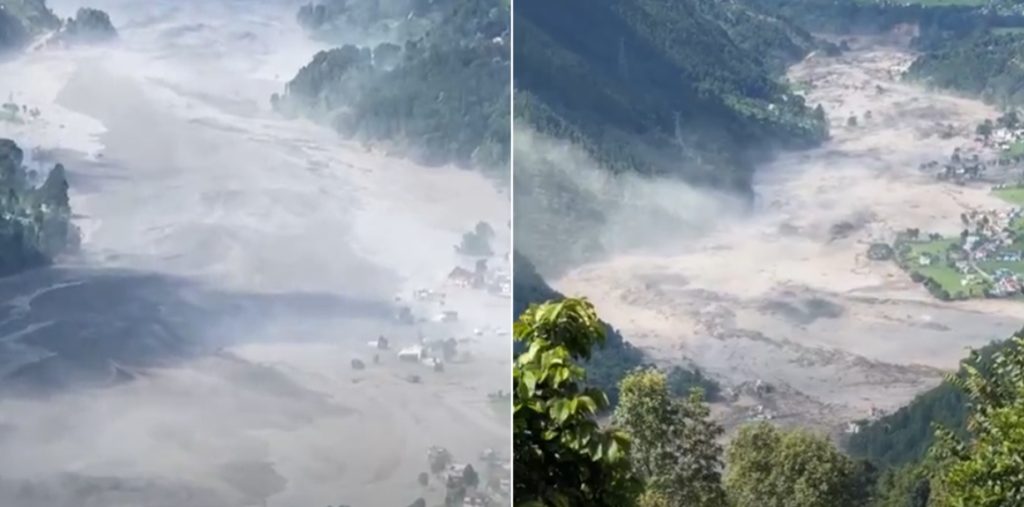
Source: Onlinekhabar.com
Nature’s wrath might not have claimed so many lives and destroyed so much property had settlements not expanded along glacier-fed riverbanks and other vulnerable areas. But that is a counterfactual. People live where they live, livelihoods depend on these rivers, and development has rarely waited for perfect knowledge of risk.
The Himalayan rivers are beautiful, mighty, and, at times, deceptively calm. They sustain communities, agriculture, hydropower, and entire economies. But they can also be deadly.
As a researcher, my thoughts keep returning to one unavoidable conclusion: Nepal is a living laboratory for understanding climate change, geological evolution, and disaster-induced shocks. We have no choice but to become world-class at understanding them. We need deeper research. Better data. Stronger institutions. And, most importantly, the ability to translate knowledge into resilience before the next shock arrives. Because this is our land. These are our mountains. These are our rivers. There is nowhere else to retreat to.
We cannot negotiate with the Himalayas. We cannot stop the rivers from rising, the glaciers from changing, or the earth from shaking. But we can prepare. We can understand the risks before they become disasters. We can build infrastructure that withstands them. We can design communities and institutions that recover faster.
There is no escape. There is only adaptation.
Nepal cannot afford to remain a passive victim of forces shaping its future. We must become one of the world’s leading centers of knowledge on climate, disasters, and Himalayan resilience, and turn that knowledge into survival.
The next shock will come. The question is whether we will be ready.
Post a Comment